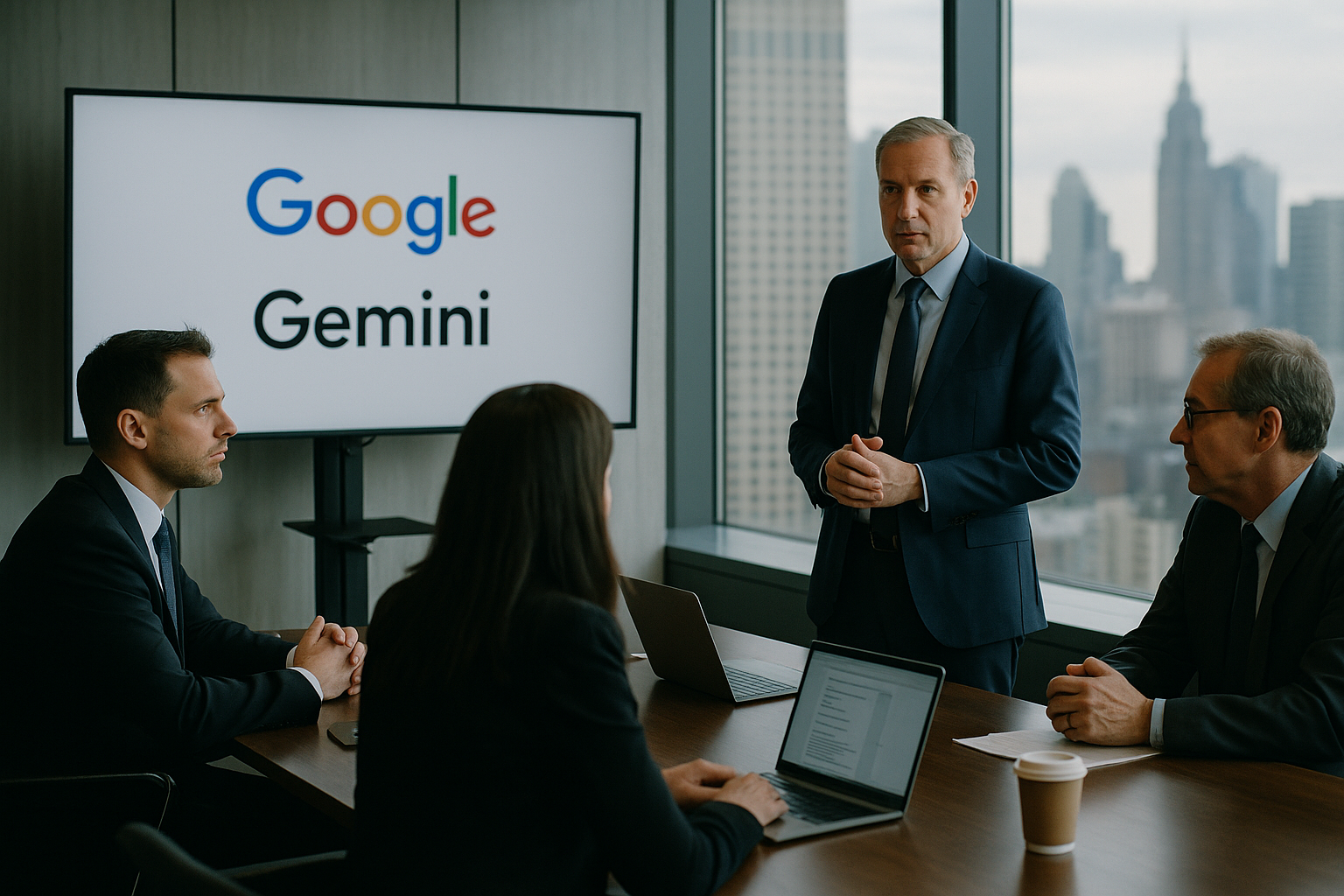
Google's I/O 2026 announcements reveal a clear competitive strategy: embed Gemini AI capabilities so thoroughly into core Google products that users experience AI as inseparable from their existing workflows rather than as a standalone model choice. The company demonstrated this across multiple fronts—Gemini Omni and Gemini 3.5 were showcased through nine demonstration videos highlighting real-world applications in Search and Shopping, where AI now helps users discover thrift and vintage items by analyzing images and product listings at scale. Beyond consumer search, Google deployed Gemini in Google AI Studio to build interactive quiz experiences (literally 'vibe coding' the I/O 2026 announcements into a playable format), and internal teams used the model to plan the conference itself. This isn't simply about releasing powerful models; it's about making Gemini the default cognitive layer across Google's ecosystem, reducing friction for billions of users to adopt AI without ever downloading a competing product.
The significance becomes clearer when measured against Meta's contrasting strategy. Meta has prioritized open-sourcing Llama models, placing AI capability into developers' hands and betting on distributed adoption and community contribution. Google's approach inverts this: centralize AI value within proprietary consumer touchpoints. Google Search reaches 8.5 billion daily searches; YouTube processes billions of hours of content; Gmail handles roughly 380 billion emails daily. By integrating Gemini directly into these platforms—not as experimental features but as core functionality—Google creates a moat that doesn't require users to choose a better model; it requires them to abandon Google's services. The nine Gemini Omni and 3.5 demos shown at I/O exemplified this: shopping assistance, creative tools in AI Studio, and event logistics automation all operated within existing Google properties. This vertical lock-in strategy has historically worked for Google (search + advertising, Android + Play Store), but it's also exposed the company to regulatory pressure around monopolistic bundling.
However, this strategy carries underexplored risks. Regulatory scrutiny around AI bundling is intensifying globally—the EU's Digital Markets Act already constrains how tech giants can integrate services. Developer sentiment matters too; if Google's approach feels like forcing Gemini adoption while limiting third-party AI integrations, it could trigger backlash similar to Apple's App Store controversies. Additionally, the lock-in thesis assumes Gemini's quality remains competitive. Meta's open-source strategy allows external researchers and developers to improve Llama models, potentially creating unexpected performance breakthroughs outside Google's control. Finally, by embedding AI so deeply in consumer products, Google assumes users value seamless integration over choice—a bet that contradicts rising regulatory pressure for interoperability. Google I/O 2026 painted a picture of AI so woven into daily digital life that switching feels impossible. Whether that vision represents progress or a cautionary tale about tech concentration remains the real question.