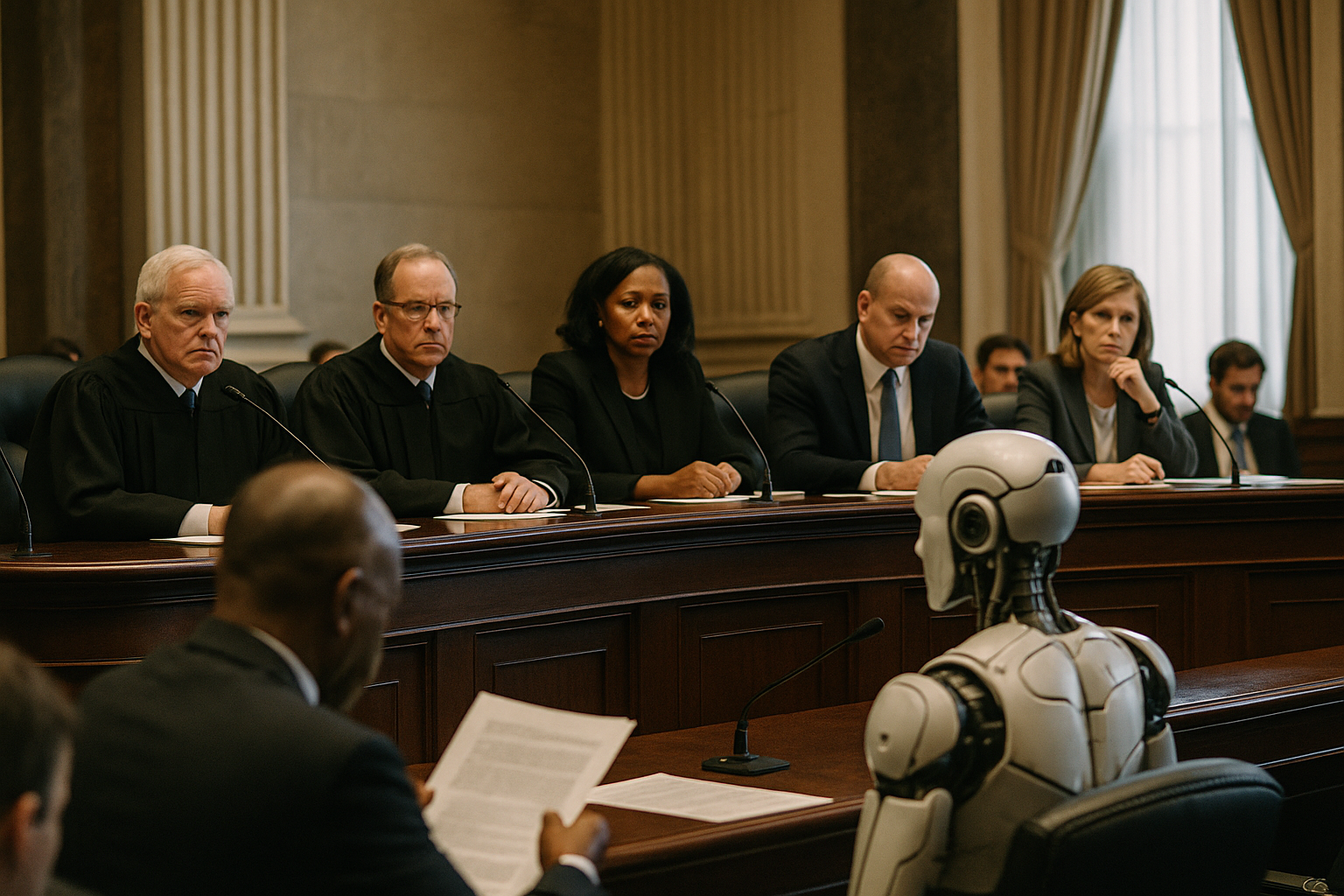
Federal courts are experiencing a surge in AI-generated legal filings that judges and court administrators say is straining resources and creating new administrative challenges. Judge Maritza Braswell, a federal magistrate judge in Colorado, spends considerable time reviewing pro se (self-represented) documents that appear to be AI-drafted, many containing legal errors, formatting issues, and arguments that misunderstand applicable law. The Colorado federal courts have reported that approximately 15-20% of pro se filings now show signs of AI generation, according to internal court statistics shared with legal technology researchers. This mirrors reports from other federal districts, including the Southern District of New York and the Central District of California, where court administrators have documented similar upticks. While exact national figures remain elusive—the Administrative Office of the U.S. Courts has not yet compiled comprehensive data on AI-generated filings—individual judges report spending significantly more time screening submissions to separate meritorious cases from malformed ones. Some estimates suggest that processing a problematic AI-generated filing costs courts between $500 and $1,200 in judicial and staff time compared to roughly $100 for a standard pro se submission.
The underlying tension reveals a genuine policy dilemma: AI legal tools have dramatically lowered barriers for people who cannot afford attorneys, yet they simultaneously generate documents that consume judicial resources without improving case outcomes. Legal aid attorneys note that while AI drafting software has enabled some low-income litigants to file claims they otherwise couldn't afford, the quality disparity creates new burdens. 'We're seeing clients get filed, but not represented effectively,' explains Maria Chen, director of the National Legal Aid and Defender Association, in recent testimony before a House Judiciary subcommittee in March 2024. The subcommittee hearing marked the first significant congressional attention to the phenomenon, with members questioning whether legal AI tools should require disclosure statements—similar to disclaimers in financial or medical contexts—or whether bar associations should impose minimum accuracy standards before tools can market themselves as 'legal assistance.' Currently, no federal standard exists. Meanwhile, some legal technology vendors argue that enhanced disclosure and regulation would further restrict access for low-income users by increasing compliance costs. Companies like Rocket Lawyer and LegalZoom contend their tools, when properly used as supplements rather than replacements for attorney counsel, have expanded access meaningfully.
The regulatory gap mirrors broader questions about how government should oversee AI tools across different sectors. The FDA requires medical AI software to demonstrate safety and accuracy before market deployment, a process taking 18-36 months, whereas legal AI tools face zero federal approval requirements—they're governed only by state bar associations that lack enforcement mechanisms across state lines. The contrast raises a critical policy question: Should legal AI tools undergo comparable gatekeeping before deployment, even though doing so might further delay access for unrepresented litigants? Some experts propose a middle path—mandatory disclaimers indicating when AI drafted documents, along with standardized quality benchmarks without formal pre-market approval. Several states, including California and New York, are currently drafting bar association guidance on AI disclosure requirements, but these remain non-binding. Judge Braswell and her colleagues await clearer direction from policymakers about their role in managing this flood, even as the volume of AI-generated filings continues to grow at an estimated 30-40% year-over-year rate in federal courts.