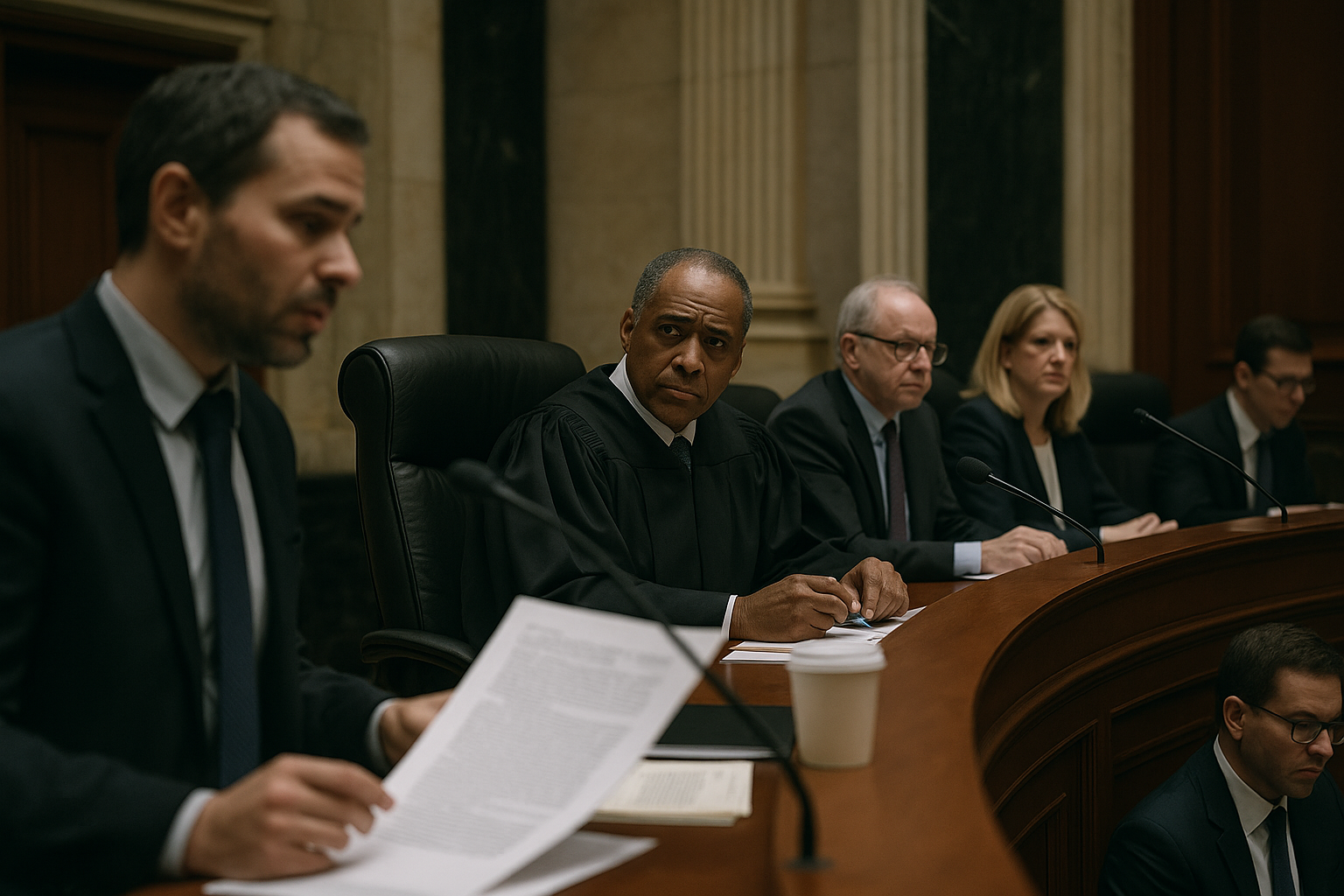
Federal judges are confronting an unexpected consequence of AI democratization: a flood of poorly drafted, AI-generated lawsuits that clog court dockets and consume judicial resources. Judge Maritza Braswell, a federal magistrate judge in Colorado, reports spending considerable time sifting through stacks of documents submitted by pro se litigants—self-represented parties without lawyers—many of whom have turned to AI legal drafting tools to compose filings they cannot otherwise afford. While courts have long managed an influx of unrepresented litigants, the introduction of generative AI has introduced a new complication: documents riddled with fabricated case citations, procedural errors, and legal reasoning that sounds plausible but lacks factual grounding. The issue strikes at the heart of access to justice, where economically disadvantaged plaintiffs seeking to navigate complex legal systems increasingly rely on imperfect AI assistance, only to find their cases dismissed or delayed due to filing defects.
The practical impact on judicial administration is becoming measurable. Magistrate judges report extended chamber time devoted to parsing AI-generated filings for the hallmark errors that compromise their viability: nonexistent precedents, misapplied legal standards, and incoherent factual narratives that AI language models have confabulated. Unlike human pro se filers whose errors are typically honest mistakes, AI-generated documents present a qualitatively different challenge—they appear formally competent while concealing substantive flaws that require judicial intervention to identify. Courts have begun implementing informal screening protocols, and some chambers are developing guidance documents specifically addressing how judges should handle AI-drafted submissions. The Administrative Office of U.S. Courts has started collecting data on this phenomenon, though comprehensive statistics remain limited, leaving the true scope of the problem incompletely documented across the federal judiciary.
This development raises urgent policy questions about judicial responsibility and AI governance. Should courts implement mandatory disclosures requiring pro se filers to acknowledge AI use? Should legal AI platforms be subject to accuracy standards or liability for hallucinations that mislead users? The surge highlights a tension in AI policy: tools designed to expand access have instead created new barriers for the vulnerable populations they purport to serve. Federal judges, already stretched thin, must now become de facto AI auditors, examining the output of systems they did not design and cannot fully understand. As AI legal assistants proliferate—from ChatGPT to specialized legal startups—the judiciary faces pressure to establish clearer protocols, potentially through rulemaking by the Judicial Conference, to address whether and how courts should accommodate or restrict AI-assisted filings in the name of maintaining docket integrity and judicial efficiency.